
Most Businesses Don’t Have A Marketing Problem — They Have An Infrastructure Problem
Most businesses believe they need more leads, more ads, or more marketing. In reality, many growing companies are being held back by disconnected s…
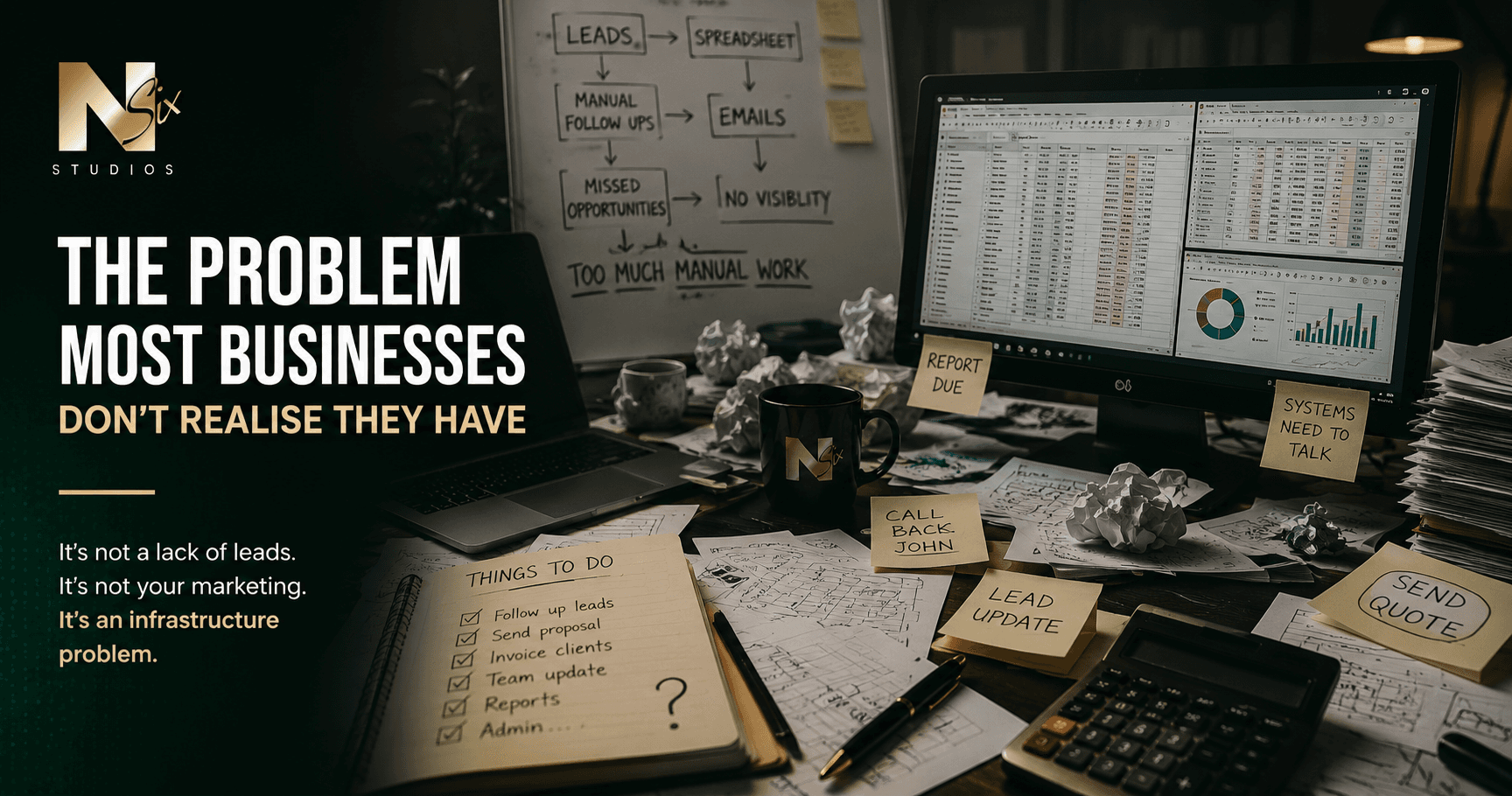
Most Businesses Don’t Have A Marketing Problem — They Have An Infrastructure Problem
Most businesses believe they need more leads, more ads, or more marketing. In reality, many growing companies are being held back by disconnected systems, inefficient workflows, manual admin, and operational bottlenecks that quietly limit growth.
The Problem Most Businesses Don’t Realise They Have
Most businesses assume that if growth slows down, enquiries drop, or operations begin feeling chaotic, the solution is simply more marketing. More ads. More social media. More leads. But in reality, many growing businesses are already generating enough opportunities — they just lack the operational infrastructure needed to handle growth efficiently. Across industries, businesses are still relying on disconnected systems, spreadsheets, manual admin, scattered communication, outdated websites, and workflows that were never designed to scale. At first, these inefficiencies seem manageable. But as businesses grow, these small cracks quickly become major operational bottlenecks: Leads get missed Follow-ups become inconsistent Staff waste hours on repetitive admin Customer communication slows down Teams lose visibility across jobs and enquiries Important data becomes fragmented across multiple systems The result is a business that appears busy on the surface, but internally operates with constant friction. For many companies, the issue is not a lack of demand. It is a lack of structure.
Why More Leads Alone Won’t Fix Operational Chaos
One of the biggest misconceptions in modern business is the belief that more marketing automatically solves growth problems. In reality, scaling a business without improving internal systems often amplifies existing operational weaknesses. A company generating 20 enquiries per month with poor systems may survive. A company generating 200 enquiries per month with poor systems often becomes overwhelmed. Without the right infrastructure in place: response times slow down customer experience becomes inconsistent staff become reactive instead of proactive reporting becomes unreliable conversion rates quietly decline This is why many businesses experience periods where they are technically growing, but still feel disorganised internally. The issue is rarely effort. The issue is usually operational design. Modern businesses require systems that connect departments, automate repetitive processes, centralise communication, and create visibility across the entire organisation. Growth without infrastructure creates stress. Growth with infrastructure creates scalability.
The Shift Towards Operational Infrastructure & Automation
Over the last few years, businesses have started moving away from isolated software tools and towards connected operational ecosystems. Instead of relying on multiple disconnected platforms, companies are increasingly looking for systems that allow their operations to work together intelligently. This includes: CRM systems automation workflows AI-assisted processes lead management systems booking systems reporting dashboards internal communication tools customer portals workforce management systems The goal is not simply to “use more software.” The goal is to reduce friction. When systems are properly connected: enquiries are tracked automatically tasks are assigned faster reporting becomes clearer customer journeys improve admin workload decreases businesses become significantly more scalable This is where operational infrastructure becomes one of the most important investments a modern business can make.
Why Businesses Are Beginning To Prioritise AI & Automation
Artificial intelligence and automation are rapidly changing how businesses operate. However, many companies still misunderstand what automation actually means. Automation is not about replacing people. It is about removing repetitive operational friction. Tasks that previously consumed hours of manual admin can now be streamlined through intelligent workflows and integrated systems. This can include: automated lead assignment instant customer notifications workflow triggers reporting generation scheduling systems automated follow-up sequences AI-assisted customer support internal operational alerts The businesses that adopt operational automation early are often able to: reduce overhead improve customer response times scale more efficiently increase profitability without dramatically increasing workload The future of business growth is no longer purely driven by marketing alone. It is increasingly driven by operational efficiency.
Building Businesses Designed To Scale
At N Six Studios, we believe modern businesses require more than just websites or marketing campaigns. They require operational infrastructure built for long-term scalability. As businesses grow, the need for connected systems, intelligent workflows, automation, and streamlined operations becomes increasingly important. That is why more companies are beginning to rethink how their internal operations function — not just how their branding looks externally. The businesses that scale most effectively over the next decade will likely be those that: reduce operational friction centralise their systems automate repetitive processes improve visibility across operations create stronger customer experiences through better infrastructure Technology is no longer simply supporting businesses. It is becoming the foundation that modern businesses operate on.